
Insulin: The Little Hormone Behind a Big Story
Diabetes is a balancing act.
Diabetes mellitus, commonly known as sugar disease, is a chronic metabolic disorder in which blood glucose levels (blood sugar) rise abnormally high because the body either cannot produce enough insulin or is unable to use the insulin it produces effectively. The word insulin comes from the Latin word insula, which means “island.”
Thanks to Sir Edward Albert Sharpey-Schafer, who coined the name in 1910, and equal credit to Jean de Meyer (1909). As the name suggests, insulin is produced by specialised clusters of cells in the pancreas known as the islets of Langerhans. These tiny clusters of cells produce this remarkable hormone.
Do We Really Need to Care About Insula (Insulin)?
Insulin is a hormone produced by the pancreas, a vital, flat, pear-shaped, spongy gland that is about six inches long and located deep in the upper abdomen, behind the stomach. It helps glucose move from the bloodstream into the body’s cells, where it is converted into energy for our day-to-day activities. When this process fails, excess glucose can gradually damage blood vessels, nerves, and other vital organs, including the kidneys, eyes, and heart.
Types of Diabetes.!!
Contrary to what the name might suggest, sugar disease(Diabetes) is not simply a disease caused by excessive consumption of sweets, desserts, or sugary beverages. Diabetes is a complex condition influenced by several factors, including heredity, age, body composition, insulin production and function, physical activity, sleep, biological processes, environmental factors, and even pregnancy. Although dietary habits play an important role in the development and management of certain types of diabetes, blaming someone for having diabetes because of their food choices is neither fair nor scientifically accurate.
Diabetes mellitus manifests in several distinct forms, each with its own causes, characteristics, and challenges.
- Type 1 Diabetes
- Type 1 diabetes occurs when the immune system mistakenly attacks and destroys the insulin-producing beta cells in the pancreas. It is an autoimmune disease and is not caused by excessive sugar consumption or a lack of physical activity. People with type 1 diabetes require insulin to survive.
- Type 2 Diabetes
- Type 2 diabetes is the most common form of diabetes. It develops when the body becomes resistant to insulin and, over time, the pancreas cannot produce enough insulin to compensate for this resistance. Family history, ageing, physical inactivity, excess body fat (particularly abdominal fat), and certain metabolic factors can increase the risk of developing this condition.
- Gestational Diabetes
- Gestational diabetes develops during pregnancy when the body cannot produce enough insulin to meet the increased metabolic demands associated with pregnancy. It often improves after childbirth; however, women who experience gestational diabetes have a higher risk of developing type 2 diabetes later in life.
- Neonatal Diabetes
- Neonatal diabetes is a rare form of diabetes that develops within the first six months of life. It is often caused by genetic changes and is a form of monogenic diabetes. Approximately 50% of affected infants have permanent neonatal diabetes mellitus, a lifelong condition, while others may have a transient form that can resolve during infancy or childhood.
- Brittle Diabetes
- Brittle diabetes is an informal term historically used to describe diabetes characterised by frequent, severe, and unpredictable fluctuations in blood glucose levels, including episodes of both high and low blood sugar. It is most commonly associated with type 1 diabetes.
- Prediabetes
- Prediabetes is a condition in which blood glucose levels are higher than normal but not yet high enough to meet the diagnostic criteria for type 2 diabetes. It indicates an increased risk of developing type 2 diabetes and related health complications. With appropriate lifestyle changes and, in some cases, medical intervention, progression to type 2 diabetes can often be delayed or prevented.
Disclaimer: Diabetes encompasses several types and subtypes. This blog highlights the predominant forms, while other less common variants are beyond its scope. The aim is to provide readers with a basic understanding of the major forms of diabetes rather than an exhaustive medical classification.

What Does Diabetes Mean to Me?
Hailing from the southern part of India, I come from a culture where food is deeply intertwined with our traditions, family, identity, and emotions. The first fella who makes a prompt appearance at almost every meal is RICE. He is everywhere, an inseparable part of our daily staples. A steaming plate of idli dipped in piping-hot lentil sambar, a crispy dosa with a dollop of ghee and a ladleful of potato masala, lemon rice, curd rice, rice pongal, bisibele bath, pulao, biryani, or a traditional meal served on a banana leaf; these are not merely dishes. They carry memories of home, a mother’s cooking, festive celebrations, and family gatherings.
And how can we forget the best friend of many South Indians? A steaming cup of filter coffee or a cup of Irani chai, generously sweetened with sugar, is often the perfect finishing touch to a meal or the ideal companion to a conversation. For us, food is rarely just about satisfying hunger. It is about belonging, togetherness, celebration, and comfort. It is woven into the very fabric of our everyday lives.
New Normal…!!!
For me, diabetes has become a new normal. I have grown accustomed to seeing people around me grow older while living with diabetes. My father, a loyal companion of diabetes, has been living with the condition for more than 40 years. Several of my maternal and paternal relatives live with diabetes too, and now, my circle of friends has recently begun to include an increasing number of people dealing with this condition.
Having lived in such proximity to diabetes, terms like BD Glide (a single-use insulin syringe), metformin, sulfonylureas, and Human Mixtard have become familiar to me. Interestingly, the primary reason my family bought our first refrigerator was to store insulin injections safely. This not only reflects how closely diabetes has been woven into my life but has also given me a fair amount of familiarity with its day-to-day management.
Time for Some Interesting Facts!
- Diabetes prevalence across India 🇮🇳: An analysis of national data from 2019–2021 found that diabetes prevalence was generally higher in southern Indian states than in many other parts of the country, across both urban and rural populations.
- A global rise in diabetes🌏: The number of people living with diabetes worldwide increased from approximately 200 million in 1990 to 830 million in 2022. Prevalence has been rising more rapidly in low- and middle-income countries than in high-income countries.
- The global toll of diabetes🔔: In 2021, diabetes and kidney disease caused by diabetes were responsible for more than 2 million deaths. Additionally, approximately 11% of cardiovascular deaths were attributable to high blood glucose levels.
- A growing and undertreated condition 📈: In 2022, approximately 14% of adults aged 18 years and older worldwide were living with diabetes, compared with 7% in 1990. Furthermore, 59% of adults aged 30 years and older who were living with diabetes were not taking medication for the condition.
- India’s diabetes burden🏋🏼♂️: The ICMR-INDIAB study, published in The Lancet Diabetes & Endocrinology in 2023, examined more than 113,000 participants across India. It estimated that 11.4% of the study population had diabetes, while 15.3% had prediabetes.
Source: https://www.who.int/news-room/fact-sheets/detail/diabetes
Lancet study: More than 100 million people in India diabetic
What to Do? 🤔
Enough of the information overload! Having learned from everything discussed above, I now feel confident enough to share some of my findings, experiences, and advice with my friends through this blog. The moment someone realises that diabetes is knocking at their door, there are a few essential practices I would like to share with everyone reading this blog. Think of them as a set of simple habits and precautions that can help you navigate life with diabetes more confidently.
I hope the suggestions below offer you a helping hand in understanding and managing this condition. After all, the goal is not merely to live with diabetes but to live well, with awareness, confidence, and a positive outlook.
- Welcome with a Smile 😊
- You read that right! Let’s not respond with reluctance or panic when diabetes becomes a part of our lives. Instead, let’s welcome the challenge with a smile and prepare ourselves to manage it confidently. Let diabetes know that we are ready to face the challenges it brings with awareness, discipline, and determination.
- Remember, a diabetes diagnosis does not mean the end of a joyful life. With the right approach, medical guidance, and healthy habits, you can continue to live a fulfilling life.
- Management Matters 📊
- HbA1c (glycated haemoglobin): This test reflects your average blood glucose levels over approximately the past two to three months.
- Fasting blood glucose test: This measures your blood glucose level after fasting for at least eight hours. During this period, you should not consume food or drinks other than plain water.
- Random blood glucose test: This measures your blood glucose level at any time of the day, regardless of when you last ate.
- Diabetes-Friendly Daily Food 🥙
- As I mentioned earlier, regardless of where we come from, our daily food choices influence blood glucose levels and play an important role in diabetes management. The relationship between diabetes and food can be challenging, but it can also be an interesting journey of discovering healthier ways to enjoy our favourite meals.

In my experience, some excellent choices to include in a diabetes-friendly diet are:
- Leafy greens and non-starchy vegetables: Spinach, beans, cabbage, cauliflower, and other vegetables provide essential nutrients and fibre.
- High-fibre carbohydrate sources: Whole grains, millets, lentils, and legumes can help support better blood glucose management.
- Whole fruits: Choose whole fruits rather than fruit juices to benefit from their fibre.
- Balanced meals: Combine appropriate portions of carbohydrates with vegetables, protein sources, and healthy fats.
It is equally important to limit foods that can make blood glucose management more difficult, such as sugary beverages, foods with excessive added sugar, highly refined grains, and heavily processed foods. Foods rich in saturated and trans fats should also be limited to support overall cardiovascular health.
Remember, having diabetes does not mean giving up rice, dosa, idli, or other favourite foods altogether. Portion sizes, meal balance, preparation methods, and your individual response to food all matter. The goal is to build a sustainable eating pattern rather than follow an unnecessarily restrictive diet.
PS: Not just adhering to these, I sincerely recommend meeting an experienced diabetologist and a knowledgeable dietitian; they are the right people to clarify your doubts and to provide in-depth insights and advice.
The Pain Point…!!!
We are living in a world powered by trends, technology, and intelligence. Naturally, I hoped to see a better, more effective, and less painful way to monitor blood glucose levels..
I often felt disheartened whenever I took my father for routine blood glucose tests that involved the familiar finger-prick method. The repeated pricking was not only uncomfortable and sometimes painful, but the process could also be time-consuming and yield misleading results. More importantly, a conventional finger-prick test provides only a snapshot of blood glucose levels at a particular moment, making it difficult to track sudden spikes and fluctuations throughout the day.
Watching my father go through this routine made me wonder: In an age of technological advancements, couldn’t we find a simpler, smarter, and less painful way to monitor blood glucose levels?
That question became more than just a passing thought. It was a genuine hope for a better experience for my father and for millions of others living with diabetes
Continuous Glucose Monitoring (CGM)
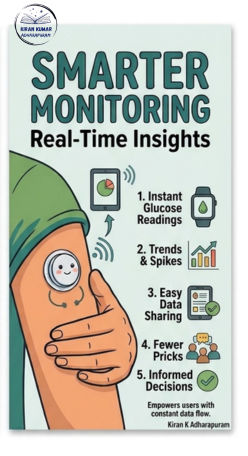
A Continuous Glucose Monitoring (CGM) system is a wearable medical device that tracks glucose levels in the interstitial fluid, the fluid surrounding the body’s cells, 24 hours a day, seven days a week. It sends glucose readings to a compatible smartphone or receiver at regular intervals, typically every few minutes.
CGM devices help people manage diabetes by reducing the need for frequent finger-prick tests. More importantly, they provide real-time insights into how glucose levels change throughout the day and night, helping users identify patterns, monitor fluctuations, and make more informed decisions about their diabetes management.
This continuous flow of information is particularly valuable because blood glucose levels are influenced by numerous factors, including food, physical activity, stress, sleep, illness, and medication. Some of these factors can be difficult to predict, making continuous monitoring a useful tool for understanding how the body responds to everyday life.
The FreeStyle Libre
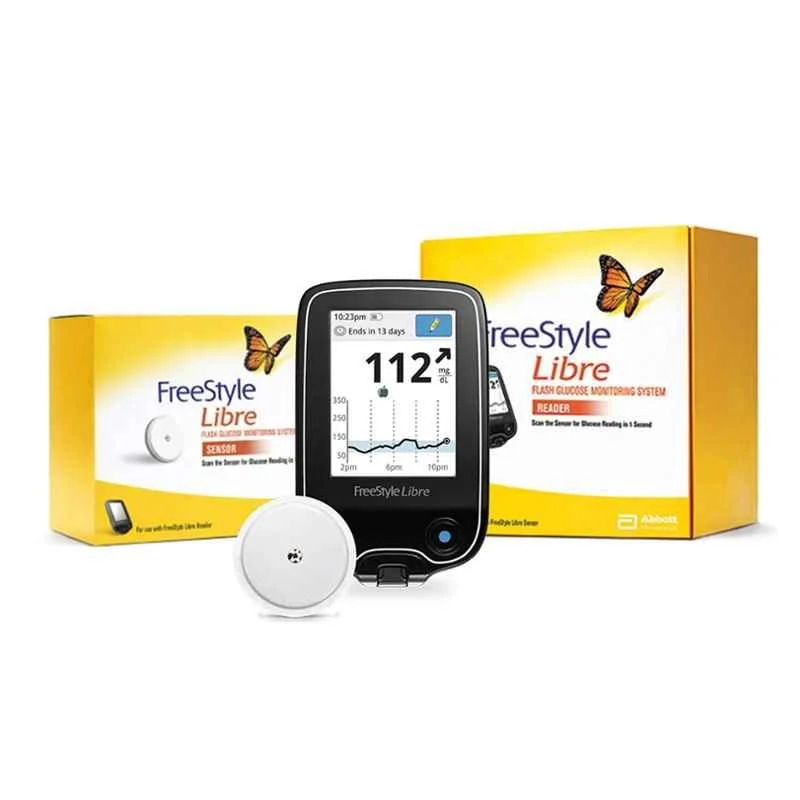
The FreeStyle Libre is a Continuous Glucose Monitoring (CGM) system developed by Abbott Diabetes Care. Designed for people living with diabetes, it measures glucose levels in the interstitial fluid and helps users monitor glucose trends throughout the day and night, reducing the need for routine finger-prick tests.

What Makes FreeStyle Libre Stand Out?
- Simple, All-in-One Application
- Unlike some CGM systems that require users to assemble a separate sensor and transmitter, FreeStyle Libre systems use a single-use applicator to help place the sensor. The application process is designed to be simple and convenient, typically requiring a single press of the applicator against the skin.
- No Routine Finger-Prick Calibration
- Unlike some earlier CGM systems that required regular finger-prick tests to calibrate their readings, FreeStyle Libre sensors are factory-calibrated. This eliminates the need for routine finger-prick calibration, making everyday glucose monitoring more convenient. However, finger-prick checks may still be necessary in certain circumstances, depending on the device instructions and the user’s symptoms.
- A More Accessible Approach to CGM
- Abbott introduced FreeStyle Libre as a more affordable alternative to many traditional CGM systems, helping make continuous glucose monitoring accessible to more people living with type 1 and type 2 diabetes. Actual affordability depends on the model, country, insurance or reimbursement coverage, and ongoing sensor costs.
My Verdict..!!
Gone are the days when the conventional finger-prick method was the only option for routine blood glucose monitoring. With the advancement of medical technology, Continuous Glucose Monitoring (CGM) systems have emerged as game changers in diabetes management. Among the available options, the FreeStyle Libre system stands out for its innovative design, convenience, accessibility, and user-friendly experience. By providing frequent glucose readings and helping users identify patterns and fluctuations, it offers a more comprehensive picture of glucose levels throughout the day and night.
Having witnessed my father manage diabetes for over four decades, I see CGM as a meaningful step towards reducing the burden of routine finger pricks and making glucose monitoring more convenient. While CGM devices do not replace the need for professional medical guidance, they can empower people living with diabetes to understand their bodies better and make more informed decisions about their care. Ultimately, the goal is not just to monitor diabetes but to manage it with greater confidence, convenience, and peace of mind.
Disclaimer: Features and functionality may vary across FreeStyle Libre models and by country, including sensor wear duration, glucose-reading methods, alerts, app compatibility, and data-sharing options. Please check the specifications and features of the model available in your region on the official FreeStyle Libre website by Abbott before making a purchase.
Website Details: https://www.freestyle.abbott/en-in/home.html
Cost & Benefits: https://www.freestyle.abbott/en-in/cost-and-benefits.html
Diabetes care is a team effort
One thing that is a constant in life is change
Change is achievable and can lead to a healthier and fulfilling life.
My Handle: Kiran_Kumar_Adharapuram
You can also explore my work -> Here
My Non-Fiction Book Reviews -> Here
My Fiction Book Reviews -> Here
My Self-Help Book Reviews -> Here


