Book Prelude..!!
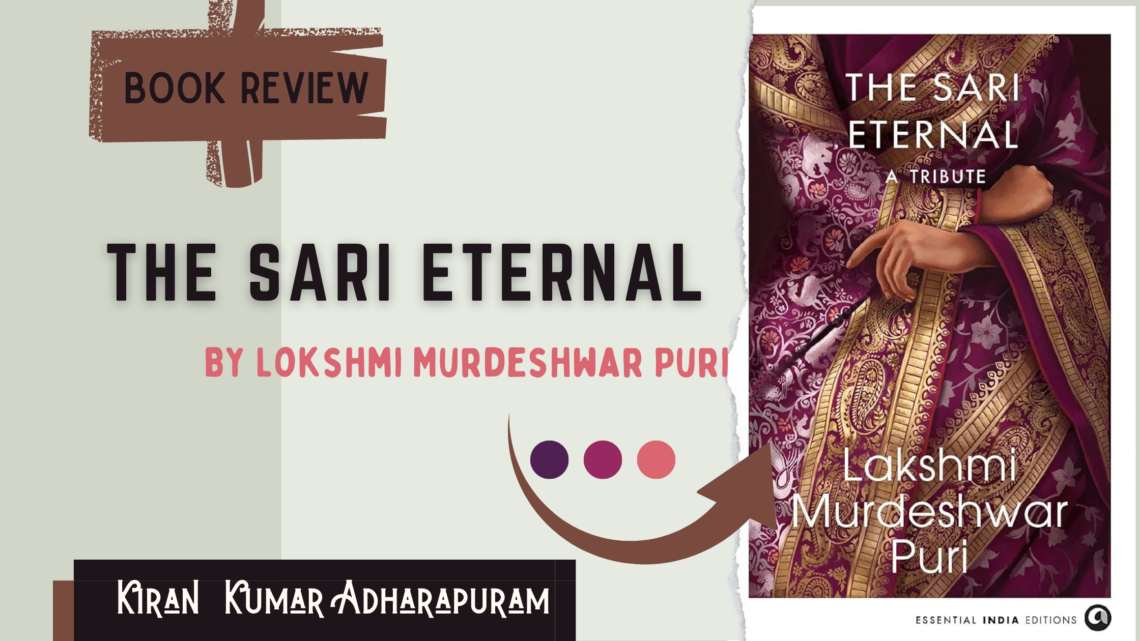
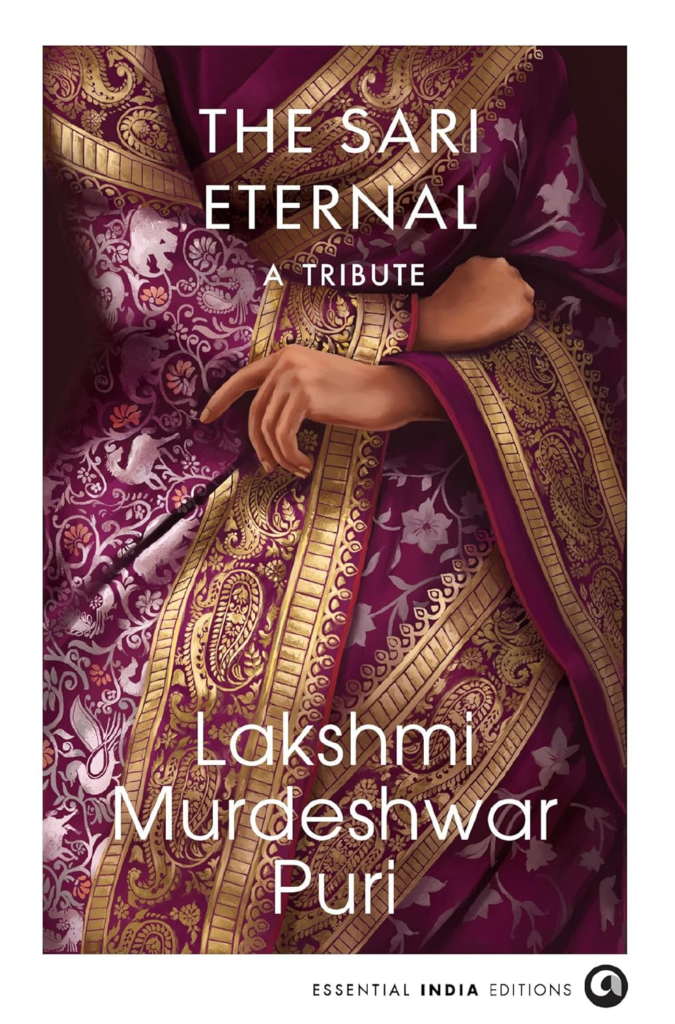
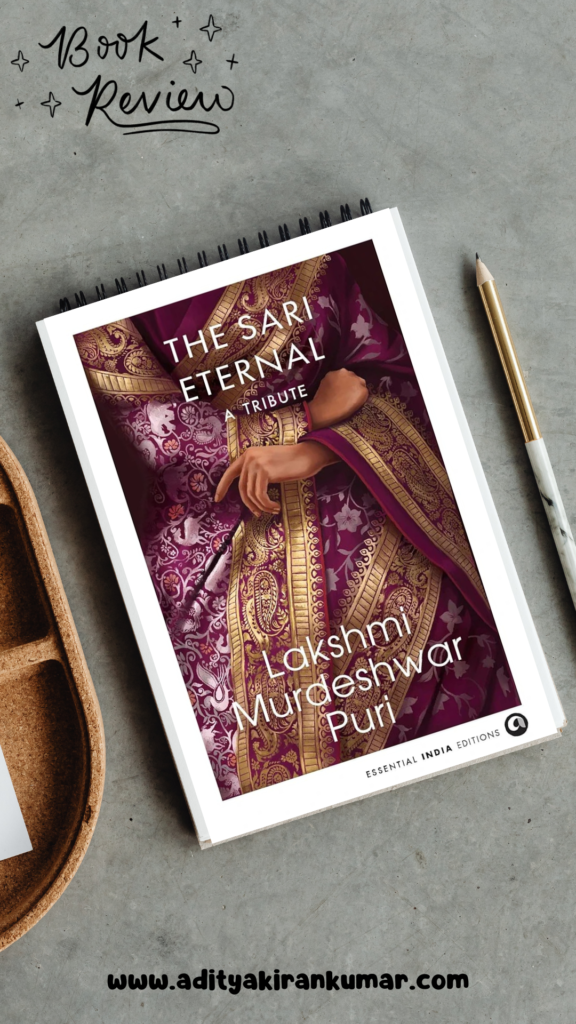
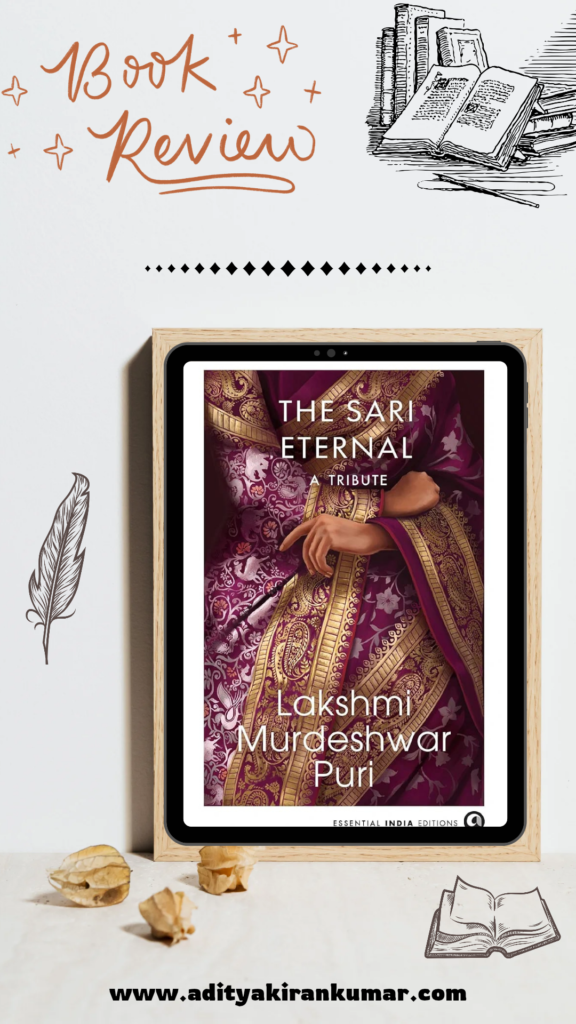
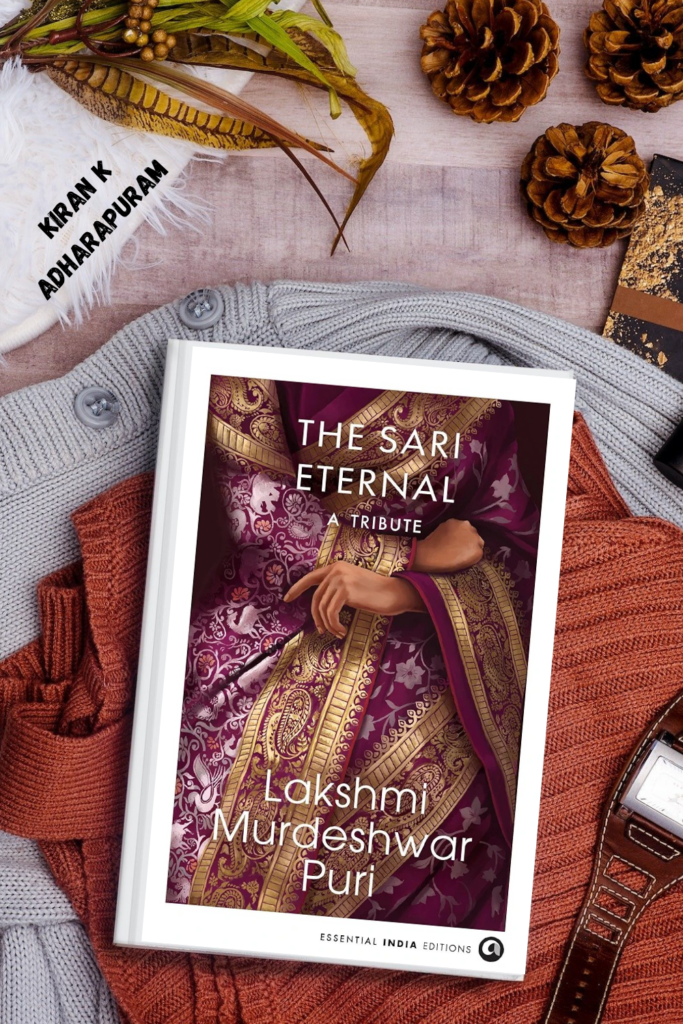
Title: THE SARI ETERNAL: A Tribute
Author: Lakshmi Murdeshwar Puri
Pages: 192
Genre: Non-Fiction
Publication date: 05 Jan 2026
Rating: ⭐⭐⭐⭐✨
About the Author..!!
Lakshmi Murdeshwar Puri was the youngest entrant into the Indian Foreign Service. After representing India abroad in key bilateral and multilateral diplomatic assignments for twenty-eight years, she went on to serve at the United Nations for fifteen years in various leadership capacities.
She has been honored with the Eleanor Roosevelt Human Rights Award, the Novus Award for Championing the Sustainable Development Goals, the Millennium Campus Award, and the Global Generation Award as an Inspiration for Youth, among others. She is a distinguished fellow of the Indian Association of International Studies, and a visiting professor at the South Asian University, New Delhi.

Puri is also the author of the national bestseller and critically acclaimed novel Swallowing the Sun. The book has received several literary honours, including the Kalinga Literary Award, the Delhi Literature Festival Fiction Prize, the Pandit Hari Dutt Sharma Award, the Special Jury Award at the FICCI Publishing Awards for Book of the Year–Fiction (English), and the REC-VoW Book Award for English Fiction. It is being translated into multiple Indian languages and adapted into a web series by Abundantia Entertainment.
Book Description..!!
Throughout history, the sari has been linked inextricably to the idea of Indian womanhood. It is the oldest surviving garment in the world, originating in the Indus Valley civilization some 5,000 years ago. In The Sari Eternal, award-winning writer Lakshmi Murdeshwar Puri explores how the unstitched fabric has evolved over time in the country’s cultural imagination. From the Banarasi to the Kanjivaram, the Sambalpuri to the Paithani, the sari unites the plural India that wears it.
Puri begins her book with the story of her childhood in Delhi and Kathmandu, featuring her mother Malati, who was a proud wearer of the sari. Later, as a college-goer, she, like other young women of the time, was inspired to wear the sari in the image of Indira Gandhi. She also recounts how, as an Indian diplomat abroad, she subverted Western assumptions of what made for the correct attire for formal occasions by doing what was considered unorthodox and wearing a sari instead of a business suit or gown.
She then explores the history of the sari—its significance in the sacred literature of the Vedic period; in the sculptures of Sanchi, Khajuraho, and Konark; and in the paintings of Raja Ravi Varma, Jamini Roy, and M. F. Husain, to name a few. The sari as a symbol of the feminine shakti is typified in the figures of goddesses like Lakshmi, Saraswati, and Parvati, as well as in Indian queens, freedom fighters, contemporary politicians, entrepreneurs, and actors, all the way through to Gen-Z influencers.
Ranging far and wide in its exploration of the garment, The Sari Eternal is a luminous account of how the sari is a crucial part of the cultural and spiritual ethos of India.
To Start…!!
yā kundendutuṣārahāradhavalā yā śubhravastrāvṛtā
yā vīṇāvaradaṇḍamaṇḍitakarā yā śvetapadmāsanā
Śāṭikā (చీర yā Sari/Saree yā ಸೀರೆ yā śāṭī) is a traditional garment often referred to as a “strip of cloth,” measuring five to six yards and draped. The sari stands as an irrefutable symbol of identity for every Indian woman. The name śāṭikā finds mention as far back as the Vedic era. In fact, Hindu Sanātana deities have made the sari their own identity, be it the śubhravastrāvṛtā reference to Śrī Sarasvatī [Goddess of knowledge, arts, and wisdom; consort of Brahmā, god of creation] or Viśvambharā/दिग्वस्त्र reference to Mā Lakṣmī (Lakṣmī Sahastranamam).

Book précis…!!!
Lakshmi Mrudeshwar Puri’s “The Sari Eternal” is an artful tribute to the six-yard unstitched river of fabric, which is beyond mere clothing and adored as a second skin by Indian women. In fact, being a male child hailing from the southern part of this beautiful subcontinent, we often carry the pride of a close association with this gorgeous fabric. As a millennial, I’m sure most of my age group fellas can relate to this fact: the first cradle cloth for a newborn until age four or five is always a sari hung from a ceiling hook. Babies habitually had their soundest sleep days in the warmth of ʌmmɑː or mātṛkā (grandmother’s) sari.
Book Preamble…!!!
Spread across beautiful chapters, Lakshmi ji is earnestly successful in unwrapping the true essence of this adorable fabric. She showcases the evolution of the sari, originating in the Indus Valley Civilization, to its near peril in the Gen Z evolutionary epoch and beyond. Lakshmi ji presents her close association with the sari and her respective journey with it. Throughout the read, there is a clear resonance of the sari as an integral part of the cultural and spiritual ethos of Hindustān.
Book Prelude..!!
Episodes of Lakshmi ji’s entrant into the Indian Foreign Service echo her honest veneration toward the sari. I second the thoughts of coining the sari as a staple dress for women, a dress that unites them amid this exasperating dissimilitude. Her reference to the recent Mahā Kumbh pays veracious embellishment to sarees. Lakshmi ji dedicates two appealing chapters to the timelines of the sari’s existence and survival. References like Didarganj, Travancore, Ajanta murals, Gupta, Mughals, and so on, up to the eras of Smt. Indira Gandhi Ji and Dr. J. Jayalalithaa show how we have imbibed the sari into our cultural and heritage DNA of अखण्ड भारत.
Book accolades…!!!
Lakshmi ji, in this entire write-up, speaks very much from the center of divine femininity, adhering to civilization, culture, and Sanātana Dharma. She brings Hindu scriptural and Upaniṣad references, along with goddesses, nadī devatā, and influential women from Vedic/epic references and their close connections with the divine śāṭī. Special mention to Lakshmi ji’s profound citations of Buddhist, Mughal, Indo-Chinese, Christian, social reformers, women CEOs, and our dynamic President Droupadi Murmu ji.
Author Accolades..!!!
Lakshmi ji dedicates one whole chapter to the sari and its Bollywood impact. She reveals ample movie references where the sari played a major role, forging a closer connection with women’s impact and story characterizations. “Didi Tera Devar Deewana,” “Desi Girl,” “Kyunki Tum Hi Ho,” and “Saree Ki Fall Se” mentions made me rewatch those filmy songs from a sari-connotative perspective.
Book Assort…!!!
Adhering to the idiom “Save the best for last,” Lakshmi ji offers a detailed inquisit into the “Future of the Sari.” She lets out her resentment toward the current Gen Z era, where the majority opinion forbids the sari as daily or usual wear, a trend that has spread to Tier 1 and 2 cities. She also cites recent OTT references and social media platforms, emphasizing sari wear as the new normal and a workspace essential. Along with Lakshmi ji, I wish for a day in the Indian attire revolution when sari retention thrives, with more and more global collaborations uplifting its legacy. On a side note, many men stealthily revere women who wear sarees amidst the western wear.
End Note..!!!
Overall, The Sari Eternal: A Tribute by Lakshmi Mrideshwar Puri is a loving tribute that digs deep into the roots of sari existence and the glories pinned to ancient Indian epics, eminent personalities, goddesses and their associates, corporate personnel, and so on. I wish this book finds more readers and inspires them to imbibe the sari as daily wear. May the sari movement prevail. Special thanks to @Aleph and Rupa for publishing this much-needed work under the “Essential India Editions” label.
End Note..!!!
If you’re someone looking for practical tools to update your emotional software, this work is an affordable, therapy-centric option to help people understand that emotional inheritance doesn’t have to be an ultimate destiny. Overall, it’s a compassionate, actionable booklet with the ability to turn pain into empowerment.
Links & FootNote..!!
My Handle: Kiran_Kumar_Adharapuram
You can also explore my works -> Here
My Non-Fiction Book Reviews -> Here
My Fiction Book Reviews -> Here
My Self-Help Book Reviews -> Here