
Book Prelude..!!
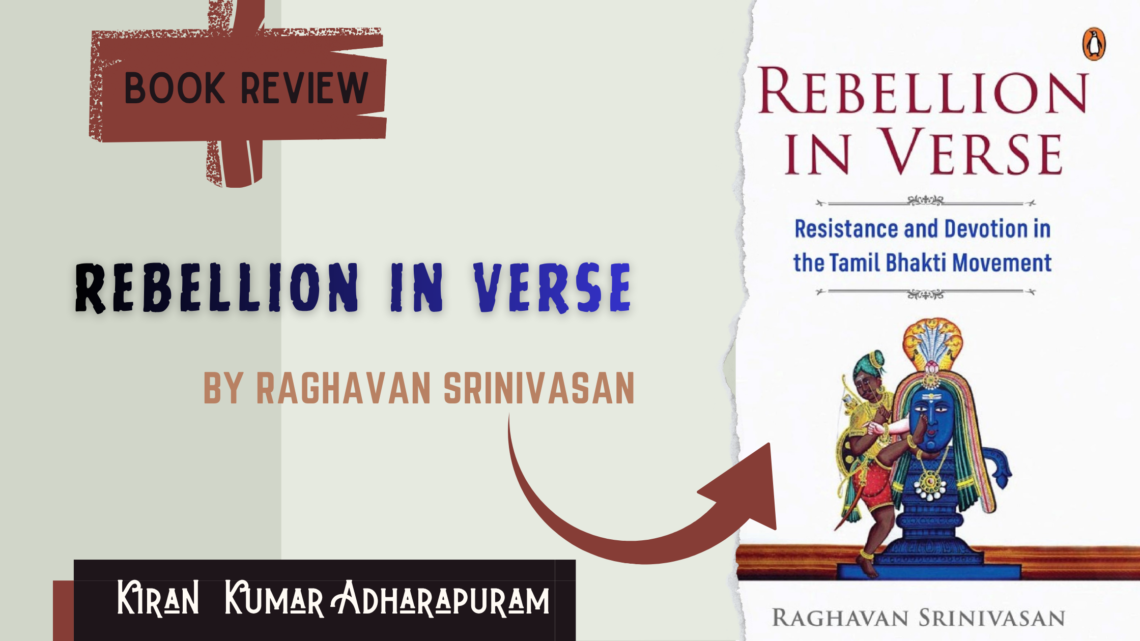
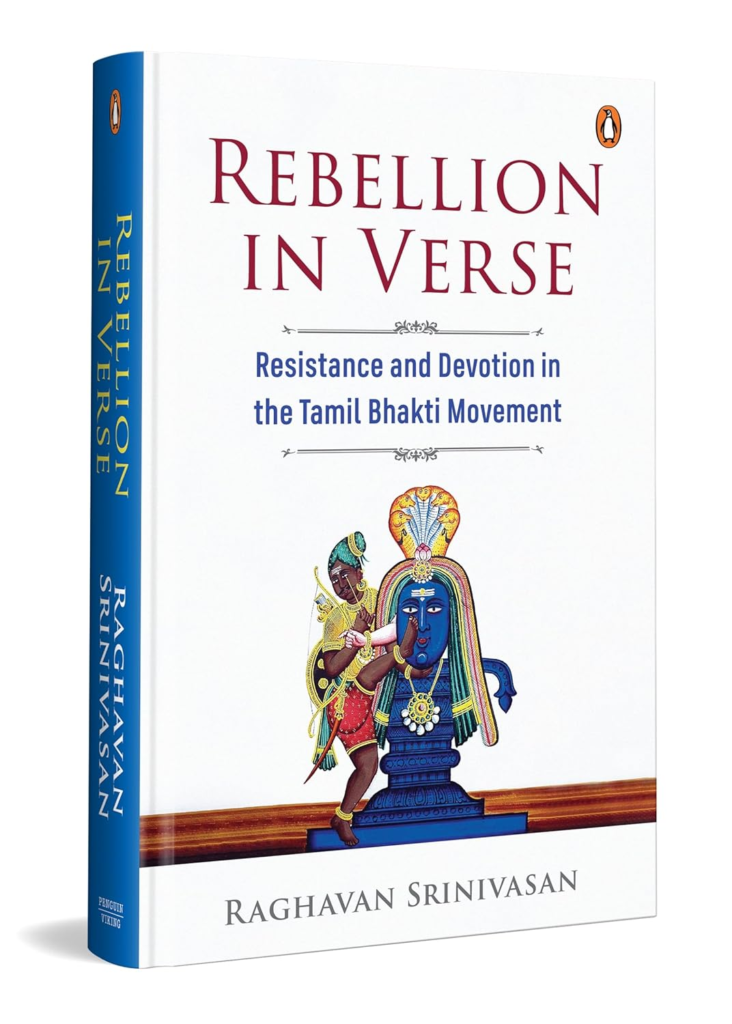
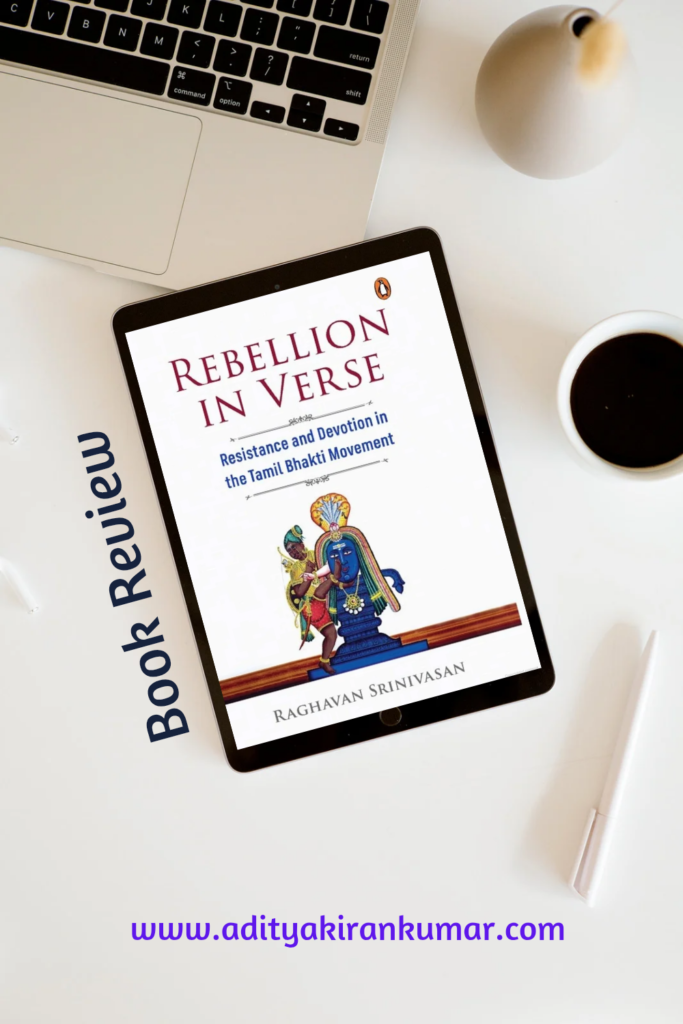
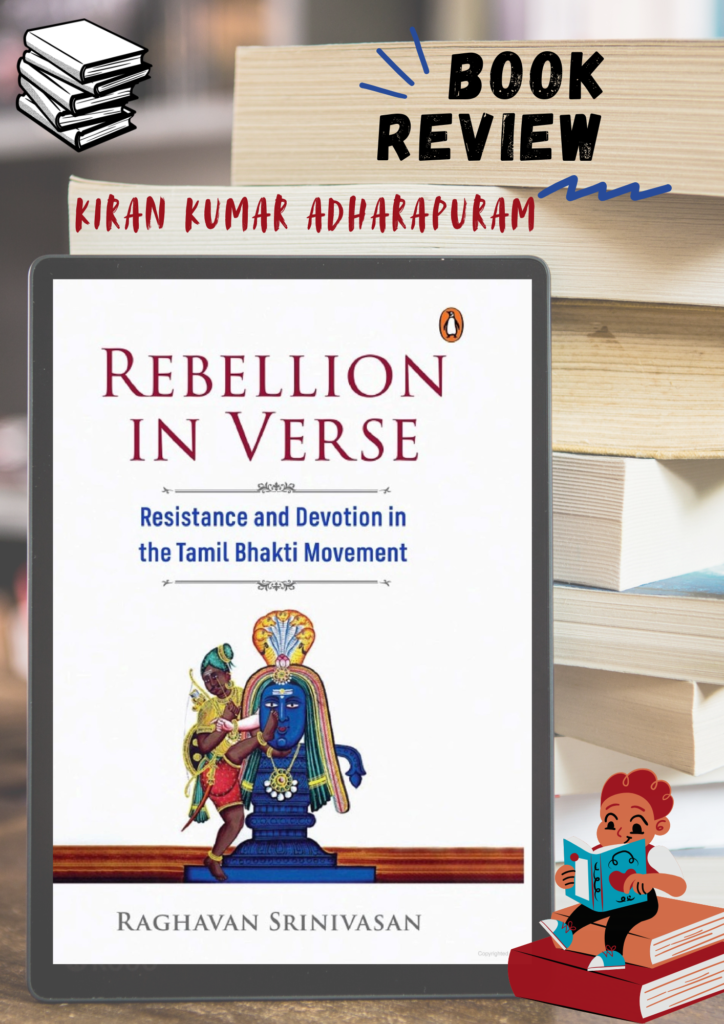
Title: Rebellion in Verse: Resistance and Devotion in the Tamil Bhakti Movement
[Indian Religious & Cultural History | Devotional Poetry, Faith and Social Change]
Author: Raghavan Srinivasan
Pages: 374
Genre: Non-Fiction
Publication date: 23 Jan 2026
Rating: ⭐⭐⭐⭐✨
About the Author..!!
Raghavan Srinivasan is a chemical engineer from Madras University and an MBA from McMaster University, Canada. He currently works as a development professional and has written a number of articles for print and online newspapers as well as international journals.
He co-edits an online magazine called Ghadar Jari Hai. Raghavan is passionate about various aspects of Indian history and writes regularly on the same. His published books include Rajaraja Chola, Yugantar, Dogged Pursuit, Indian Philosophy, and Indian Cities.

He has focused his writings on unearthing historical clues to solve the riddles of the present. Historical fiction serves as a good medium, provided it avoids getting lost in glorifying individuals and empires. His effort has been to illuminate the economic, cultural, and political milieu from the viewpoint of the productive forces of society that gave rise to those individuals and empires.
Book Description..!!
Why chant the Vedas, follow Vedic karma?
Why preach day by day the books of dharma?
Why learn the six Vedangas by rote?
One thing alone will to your rescue come―
thinking always of the Lord Supreme.
In the Tamil region in medieval times, a quiet revolution unfolded. It came to be known as the Bhakti movement. Appar’s hymn above exemplifies its spirit of rebellion against Vedic rigidity and ritual.
Rebellion in Verse unfolds a journey that goes back to the sixth century CE―a time when many yearned for a reprieve from the constraints of Vedic orthodoxy and caste hierarchies. The Tamil Bhakti movement emerged as their clarion call, a grassroots surge of devotion that redefined spirituality and the social fabric itself.
The saints of this movement were poets of the people, composing their hymns in Tamil and their verses, brimming with simplicity and profundity, wrestled divine wisdom from the elite grip of Sanskrit and handed it to the masses.
Change had dawned. It would soon ripple through history with the force of a tidal wave.
To Start…!!
“அகர முதல எழுத்தெல்லாம் ஆதி பகவன் முதற்றே உலகு”
(Agaram Mudhala Ezhuththellam Aadhi Bhagavan Mudhatre Ulagu)
Tamil [தமிழ்], one of the oldest Dravidian languages with origins over 2,000 years ago, also said to be the Proto-Dravidian language, one of the world’s longest-surviving classical tongues. The Tamil Bhakti Movement began in the sixth century not as a theological shift, but as a medium of insurgency. Redefining bhakti (பக்தி) and spirituality, this movement peaked as a revolution against Vedic orthodoxy and caste hierarchy. Practitioners found themselves part of this surreptitious revolt, not merely as a breakthrough in faith, but as a communal emendation.
Book précis…!!!
This bhakti revolution, led by saints, Nayanmars, and Alvars, was very much centered on transforming spirituality and ethnicity for the natives, freeing them from the hands of authoritarian kings and vainglorious spiritual leaders. Beyond the resonance of bhakti, these verses were a ‘request for action,’ and a societal inequity disassemble of empowerment.
This revolt isn’t limited to the land of Tamil lineage; it even found its widespread influence in neighboring states and the northern part of Akhaṇḍa Bhārat, thanks to those reformists and their powerful contributions that shattered inequalities and led the subcontinent toward justice and equality.
My Preamble…!!!
Thiru Raghavan Srinivasan, a passionate historian by profession and an engineer cum management expert by qualification, presents the idea of explaining the Nayanars and Alvars who shaped Tamil இலக்கியம் (Ilakkiyam: literature) in their respective epochs. As Thiru Raghavan rightly mentions, Tamilakam is an amalgamation of people, inventory, and notions.
These notable Tamil poets, ever since the Sangam period, played a major role in exposing secular themes such as nature, love, war, and belief in God amidst Vedic orthodoxy. Termed a golden era of literature, the Sangam period not only flourished Tamil Ilakkiyam through societal equality but also offered a divine connection, blossoming into the bhakti era.
Book Prelude..!!
Spread across பதினான்கு (14) chapters, the author unveils the Tamil bhakti revolution not just as a radical movement in medieval South India but as a medium for reshaping the ideology of God (Shiva and Vishnu), community, and authority. By terming the Alwars and Nayanars as the pillars of Southern bhakti, the author demonstrates deep research and understanding of these saints and the pathways they navigated to establish their respective poetry toward egalitarianism and social stratification.
Thiru Srinivasan’s extensive knowledge and insightful intelligence are crystal clear throughout the read. As a reader of his past works, I consider this book a true standout among them. While his previous works showcased medieval cities and philosophies, I perceive a closer relatability to the bhakti revolution and its devotional profundity in this book.
My Takeaway..!!
Establishing these distinguished saints as torchbearers of the South Indian bhakti revolution beyond caste, background, and status resonates not just with rectitude but also with compassion and emancipation. The author clearly differentiates cryptic Vedic hymns from bhakti poetry, presenting it as a wholehearted colloquy between the ardent devotee and a bosom buddy. He handpicks and offers hymns from eminent poets, ushering in emotional intensity, surrender, and metaphors of longing that transcend social boundaries, along with the associated backstory and historical context pertaining to each poet.
Author Accolades..!!!
Kudos to Thiru Raghavan Srinivasan for the chronicle presentations on women saint Karaikal Ammaiyar’s rejection of beauty, Tirunavukkarasar’s emphasis on humanity and love, Kannapa Nayanar’s offering of his own eyes to Shiva in devotion, Nammalwar’s deep mystical devotion, Andal’s unwavering joyful celebration of Perumal bhakti, Periyalwar’s adorable lullaby to Krishna Paramatma, Sundarar’s poetic affection for Lord Shiva, Tirunilakanta Nayanar’s fidelity and discipline, Tirumangai Alwar’s captivating hymns on Vishnu’s glory, and many more poets in detail.
I personally feel these stories are important not just for the current generation, but also essential for every reader to be aware of the legacy they carry and the rebellions they sparked in the primordial bhakti movement.
Book furtherance..!!
Hailing from the same district where Kannappa Nayanar was born in the 6th century and as a staunch visitor of శ్రీకాళహస్తి (Srikalahasti) temple, it always brings me great joy and pride to witness his glory through the writings of Thiru Srinivasan the unhesitant offering of his own eyes to శ్రీ ಕಾಳಹಸ್ತೀಶ್ವರ ಸ್ವಾಮಿ (Sri Kalahastheeswara Swami), even though the story isn’t new to me. Especially the realistic artwork, both on the cover image and within the plot, echoes the bhakti that transcends barriers.
Another notable work of the author that caught my admiration is the story of Thirunilakanta Yalpanar, a yāḻ (Tamil harp) musician, where Lord Shiva himself steps in to invite him to his temple despite him being thrown out due to caste dissimilarity. Likewise, the other stories presented in this work take us on a virtual tour of those days through the author’s lens, not just for their glory but for their transcendental devotion.
Inquisitive Emphasis..!!
The author also dedicates some pages to the echoes of bhakti beyond Tamil Ilakkiyam; he discusses the Virashaiva movement by Basavanna, the Varkari tradition in Maharashtra, Tukaram’s poetry, Kabir, Gurunanak, Sufi reforms, Chaitanya’s movements, and more.
However, I wish Thiru Raghavan had also spoken about the Haridasaru movement, the devotional saint-poets from Karnataka, India, who propagated the Dvaita philosophy and the Bhakti movement from the 13th to the 19th centuries, especially Daasashreshta Kanakadasa from the shepherd community and Sangeetha Pitamaha Purandara Dasa for their selfless contributions, establishing Vishnu’s supremacy.
End Note..!!!
Gesturing toward the thought process of bhakti beyond caste, authority, oppression, and mistreatment, ‘Rebellion in Verse’ pays true tribute to the Nayanars and Alwars of Tamilakam and their unwavering contributions to Tamil Ilakkiyam, voicing both surrender and dissent. With a blend of philosophy, iconography, historical context, and appealing illustrations, this book is a must-have for everyone to pick up to understand not just bhakti but also the timeless wisdom that reminds us of the power of faith and contention.
Good to know..!!
Appar Verses:
- Naamaarkum kudiyallom, namanai anjom
naragathil idar padom, nadalai illom
Andal’s Verses:
- Upon His tight embrace, my heart will melt like wax,
like wax that makes its way for bronze
Links & FootNote..!!
My Handle: Kiran_Kumar_Adharapuram
You can also explore my works -> Here
My Non-Fiction Book Reviews -> Here
My Fiction Book Reviews -> Here
My Self-Help Book Reviews -> Here