Book Prelude..!!
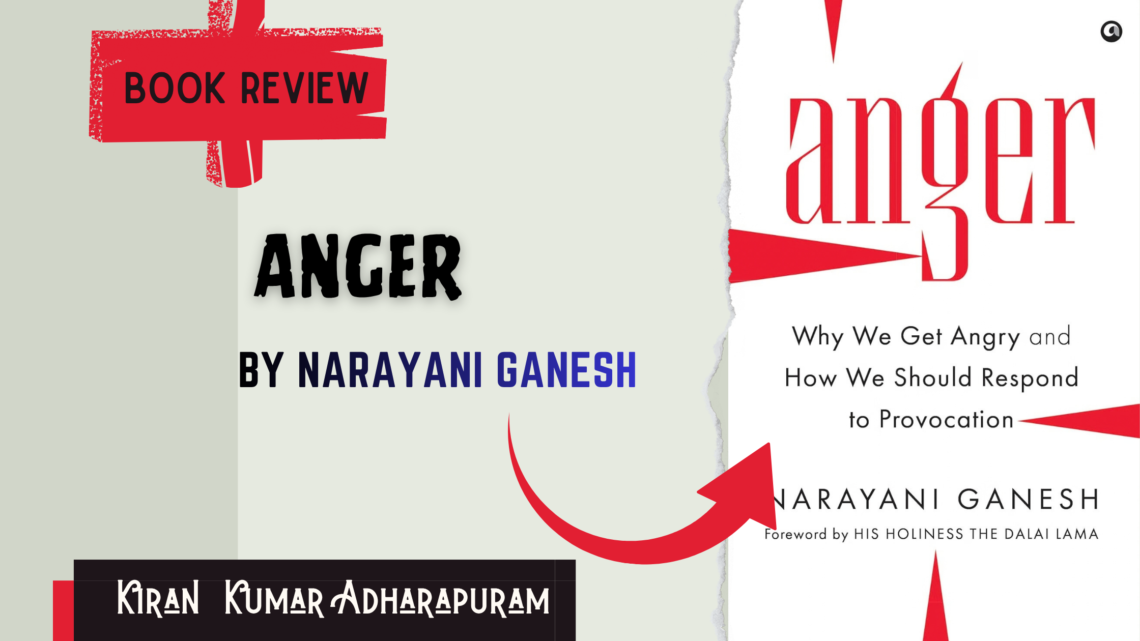
Title: Anger: [Why We Get Angry and How We Should Respond to Provocation]
Author: Narayani Ganesh
Pages: 200
Genre: Non-Fiction
Publication date: 05 Jun 2026
Rating: ⭐⭐⭐⭐
About the Author..!!
Narayani Ganesh has a postgraduate degree in Economics from Madras University. She worked for thirty-four years as a journalist–editor with the Times of India and Economic Times, wrote opinion pieces, and did interviews on issues related to the environment, science, philosophy, wellness, heritage, outer space, and travel. She was editor of ‘The Speaking Tree’ and ‘Sacred Space’—two popular columns on philosophy and spirituality—and of a Sunday broadsheet called The Speaking Tree that was published from eight cities across India.
In the course of her work, she has interacted extensively with a cross-section of philosophers and spiritual masters, scientists, and wellness gurus. Widely travelled, she is now a freelance writer.
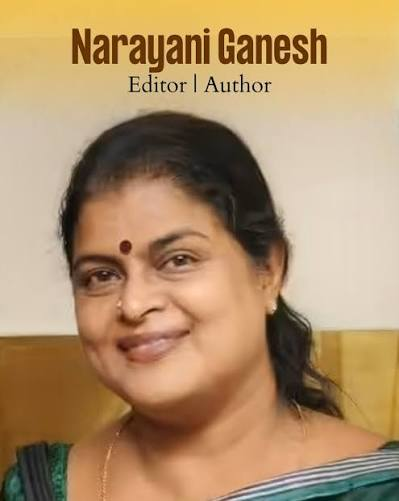
Narayani Ganesh is the proud daughter of Chevalier Shri Sivaji Ganesan, a legendary tamil actor who received numerous prestigious national and international awards throughout his career. Narayani has authored an anecdotal biography entitled My Father, Gemini Ganesan, as part of the Family Pride series of Roli Books. She has also edited and contributed to two coffee-table books on global achievers, published by the Times Group.
Book Description..!!
Anger is one of the most powerful emotions experienced by humankind. What may erupt in a moment of frustration could have simmered quietly within us for years, only to explode with consequences that can change lives. From personal relationships to global conflicts, anger has shaped the course of human history. Today, online platforms reward outrage and social media feeds are filled with content designed to inflame emotions. It is not without reason that ‘rage bait’ was named the Oxford English Dictionary’s Word of the Year 2025.
In Anger: Why We Get Angry and How We Should Respond to Provocation, the author takes readers on a reflective journey into the nature of anger—what triggers it, why it overwhelms us, and how it can both harm and transform us. She examines how this emotion has been analysed in spiritual teachings and by philosophers and thinkers belonging to various cultures and traditions around the world.
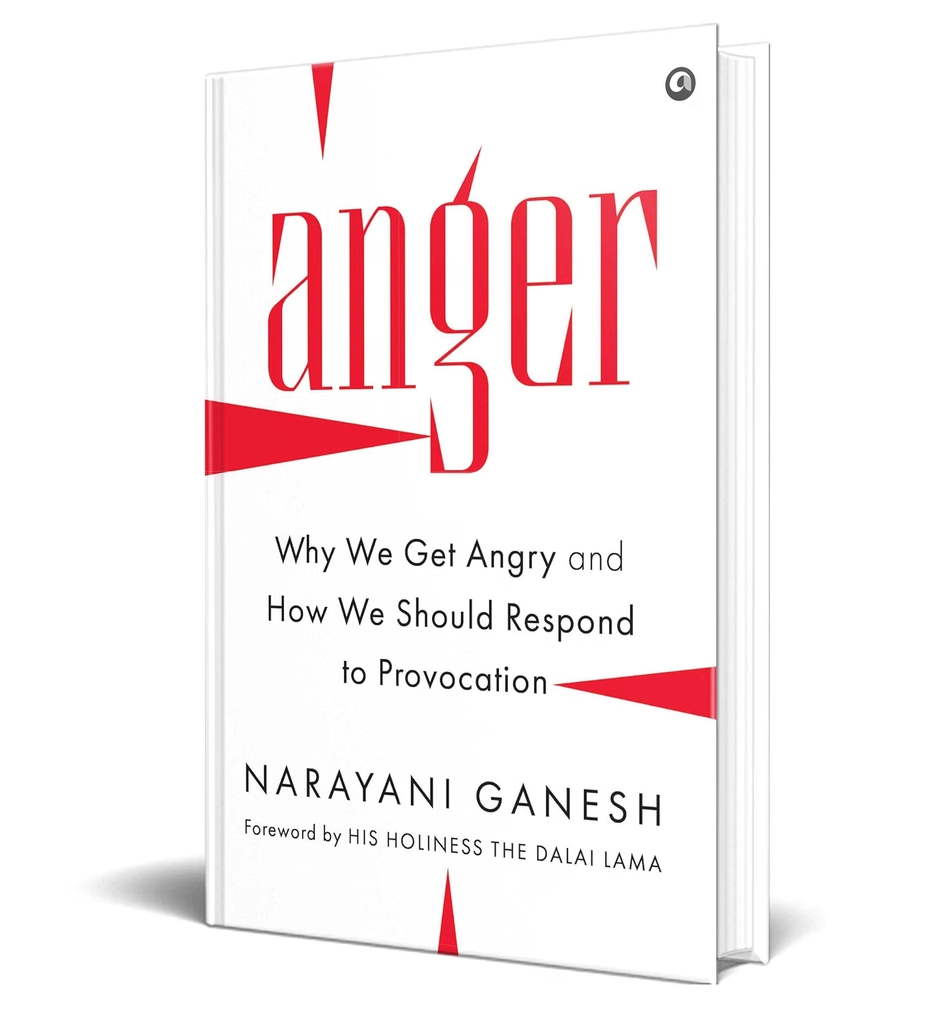
In his Foreword, His Holiness the Dalai Lama says that anger should not be seen as purely destructive or as something to be feared. The book shows readers how to accept anger and provides insights into how its negative effects can be blunted for it to be used constructively.
To Start…!!
क्रोधाद्भवति सम्मोहः सम्मोहात्स्मृतिविभ्रमः ।
स्मृतिभ्रंशाद् बुद्धिनाशो बुद्धिनाशात्प्रणश्यति ॥
[Gītā 2.63]
From anger arises delusion; from delusion, confusion of memory;
from loss of memory, the destruction of discrimination;
and from the destruction of discrimination, one is ruined.
What is Anger?
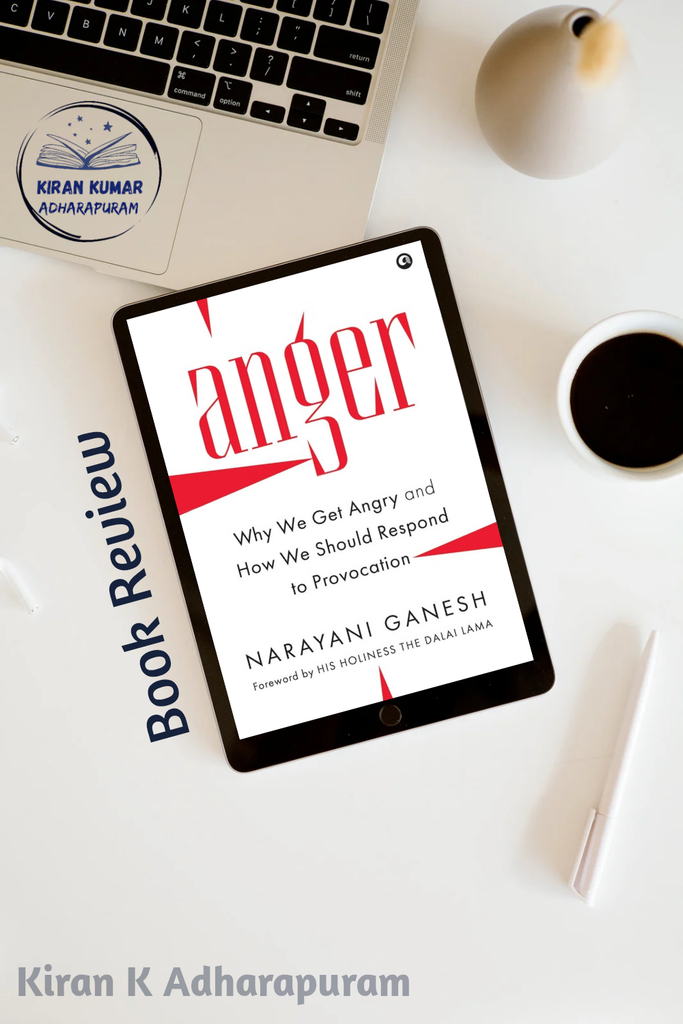
ANGER is one of the most powerful emotions experienced by humankind. As our thalaivar Rajinikanth in Padayappa say: “Anger is the cause of all miseries; one should know how to control it; otherwise life will become miserable“. H.H. Dalai Lama in the foreword of this book, conveys, “Anger is a destructive emotion that destroys our peace of mind and distorts our perception of reality“. This complicated emotion affects mankind in many dimensions and variants.
Book précis…!!!
This book stands as a reflective journey into the nature of anger, followed by its triggers, why it overwhelms mankind, and how it can harm and transform every individual. She rightly conveys the impact of present-day anger from personal relationships to global conflicts. Through this book, Narayani Ganesh invites the readers to embrace the emotion and to befriend it, rather than being downtrodden or conquered by it.
Why do we get Angry?
Anger is a devastating feeling most of us have undergone at some point in our respective lives. While there are ample reasons why we get angry, this disastrous emotion can be easily identified, as the angry person tends to scream, yell, be intemperate, derogatory, vicious, and so on. Anger brings its friends while arriving; the most common ones are furious facial expressions, breathing difficulties, disequilibrium, and so on. Current-day addenda like online platforms, social media feeds, rage bait, provocation, and many more contribute their own share of relational demolition.
What sparks anger?
Narayani Ganesh jots down a handful of anger triggers along with their deadly repercussions to our societies. Most habitual ones are Injustice, Road Rage, property disputes, Workplace Triggers, at-home issues, Unfulfilled Expectations, Low Self-esteem, personal loss, Hunger, and poverty. Anger is that feeling most of us ignore upon its intensive aggrevate, and we end up facing the inevitable repercussions to endup hurting ourselves. Narayani, in this book offers deeper insights centric to understanding the root cause and befriending it; after all, ‘Feeling the feeling is where the healing begins‘
Book précis…!!!
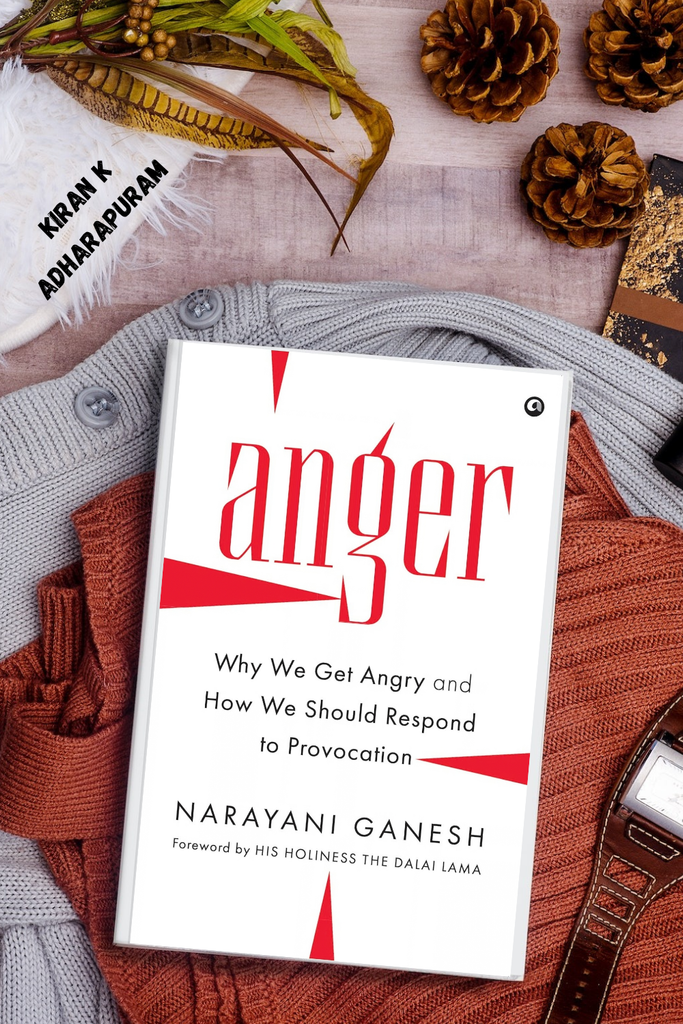
Spread across twenty-seven chapters, Narayani Ganesan bestows the timeless practices of sentience and self-restraint for exceptionally handling the complications of ANGER. Narayani also offers practical tactics to relinquish anger into clarity and mental discipline. She constantly echoes the need to observe the triggers and mindfully respond to those provocations; I second the thought to let-go the anger incitement; this act not just improve productive efficiency and keeps our minds free from its calamitous consequences. I truly adore when the author calls her book readers to turn the anger into a comfortable arena and create a safe place in the body where it can be felt. She generously proposes strategic techniques like shamata, meditation, mindfulness, compassion, pause and think, deep breath, conscious living, harmony, and so on to diffuse the anger and its aftereffects.
My Takeaway..!!
To be very frank, my acquaintance knows me as an ‘Angry Bird’; deep in my heart, I always regret mishandling this ghost and often regret carrying the impacts of anger in my lifestyle. Though I personally cultivated observing the anger patterns and acting accordingly, most of the time I feel the results aren’t in my favour. Post completion of this book, I comprehend monitoring rather than categorising anger and act accordingly. Ample suggestions offered in the book will definitely assist readers like me to accept anger and snuggle to foster peace and harmony.
Is this book a value add to readers?
Having the intensity of anger under control not only benefits individuals but also invites peace and harmony to the people around us and to the entire universe. I sincerely recommend this book to my reading community; kudos to Narayani Ganesan’s humaneness to speak about this influential emotion, along with case studies, real-time examples, interesting fables, and contemplative illustrations to handle this demon. She ensured to include the citations pertaining to anger management of global dignitaries like Thich Nhat Hanh, H. H. Dalai Lama, Yongey Mingyur Rinpoche, Om Swami, Brahma Kumaris, Swamy Chinmayananda, Kanchi Mahaperiyaval, and so on.
End Note…!!!
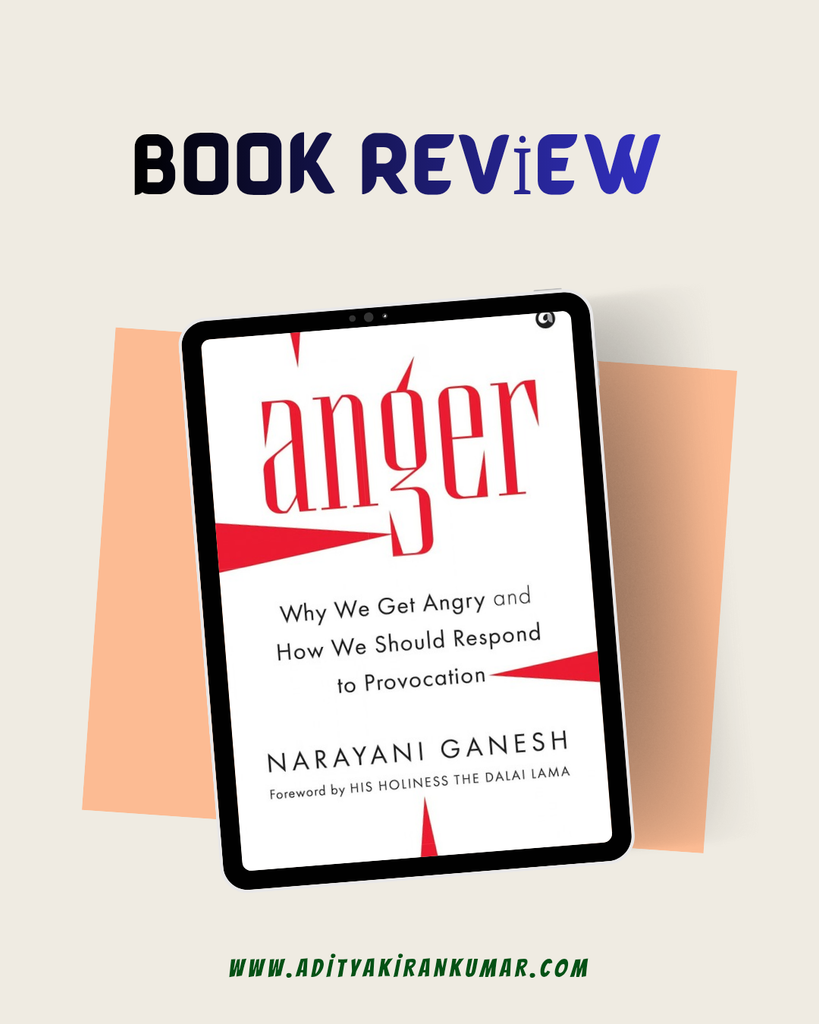
Overall, an essential, thought-provoking book for anyone interested in understanding emotions and improving their individual behaviour patterns. The author skillfully presents the motif in a way that encourages self-reflection and personal growth.
The book reverberates: anger indubitably isn’t the problem; the way we understand and handle it counts the most. I do recommend this book to readers who want to develop greater emotional awareness, patience, and control over their reactions.
While I call down my 2026 favourite book list, certainly this book will be in my top 20. Adhering to the recommendations, life lessons, and learnings, let’s all make the universe free from anger, conflict, outrage, and infuriation.
ॐ शान्तिः शान्तिः शान्तिः
Favourite Quote(s)..!!
- You get angry when you have a desire.
- Choosing to forgive is an act of self-liberation
- Anger indeed causes pain to both body and mind.
Links & Footnote..!!
My Handle: Kiran_Kumar_Adharapuram
You can also explore my works -> Here
My Non-Fiction Book Reviews -> Here
My Fiction Book Reviews -> Here
My Self-Help Book Reviews -> Here